Apex Vape
As vaping continues to gain popularity, enthusiasts often ask, "What is the best temperature for vaping dry herbs?" The quest for the ideal temperature showcases a blend of science and personal preference. Each strain of dry herb offers unique flavors and effects, influenced significantly by the temperature at which they are vaporized.
In 2026, many vapers are eager to optimize their experience. The right temperature can enhance the flavors and produce cleaner hits. Research suggests that lower temperatures may preserve terpenes, while higher settings can release potent cannabinoids. However, it’s essential to remember that personal experiences may vary.
Many vapers may find their perfect balance through trial and error. Experimentation is valuable but can be frustrating. The nuances of vaping dry herbs can challenge even seasoned users. Therefore, addressing the question of the best temperature requires a thorough understanding of both the herb and the vaporizer used. While guidelines exist, the ultimate decision lies with each vaper.
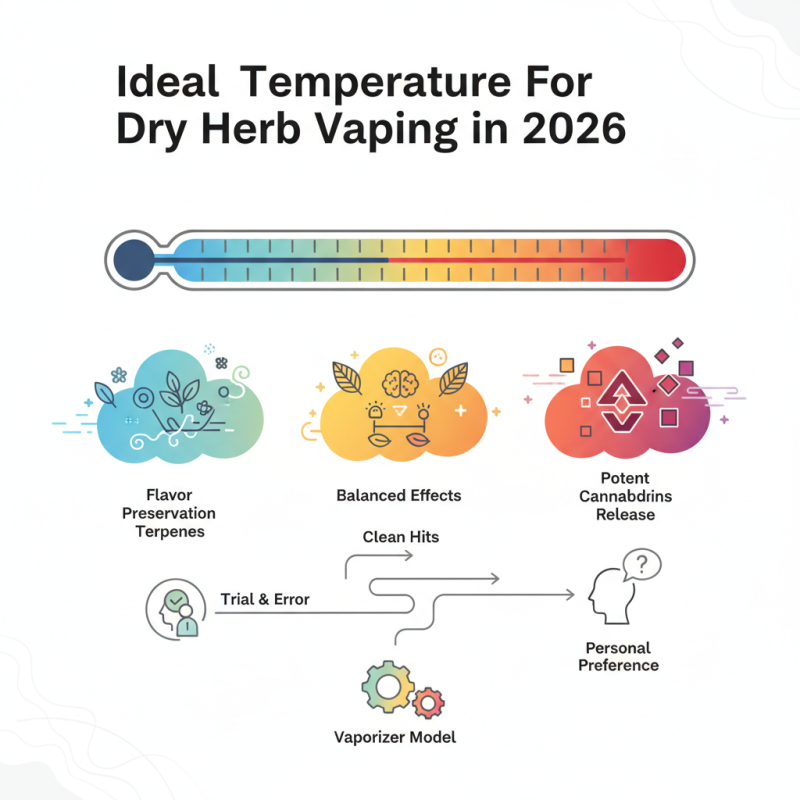
Understanding dry herbs and their properties is crucial for effective vaping. Different herbs have unique boiling points and chemical profiles. This variance significantly impacts the vapor produced and the overall experience. Studies indicate that optimal vaporization temperatures typically range from 180°C to 220°C (356°F to 428°F). Within this range, users can access essential flavors and cannabinoids effectively.
For instance, terpenes, which contribute to aroma and flavor, begin to evaporate at lower temperatures. Some terpenes boil off around 130°C (266°F), adding to the rich experience when vaping. However, higher temperatures may lead to combustion, losing the herb’s beneficial properties. Reports suggest that temperatures above 230°C (446°F) can produce harmful byproducts. These insights emphasize the importance of precision and awareness in temperature control.
Experimenting with different temperatures allows users to personalize their vaping experience. Some might find that lower temperatures offer a smoother inhalation, while others prefer the robustness of higher heats. It’s a process of trial and error. Understanding personal preferences can take time, but it enhances satisfaction. As the market evolves, continuous research into the properties of dry herbs becomes vital in refining these practices.
| Herb | Optimal Temperature (°C) | Optimal Temperature (°F) | Main Compounds | Flavor Notes |
|---|---|---|---|---|
| Dried Cannabis | 180-200 | 356-392 | THC, CBD | Earthy, Piney |
| Dried Lavender | 130-150 | 266-302 | Linalool | Floral, Sweet |
| Dried Sage | 160-180 | 320-356 | Thujone | Herbal, Earthy |
| Dried Chamomile | 120-140 | 248-284 | Apigenin | Fruity, Floral |
| Dried Peppermint | 150-170 | 302-338 | Menthol | Cool, Minty |
The optimal temperature for vaping dry herbs varies based on the specific type of herb. Different compounds vaporize at different temperatures. For example, cannabinoids and terpenes tend to release their full flavor profiles and effects at specific ranges. The ideal temperature for many dry herbs falls between 180°C to 220°C (356°F to 428°F). This range balances flavor and vapor production effectively.
A 2023 report from the Cannabis Science Journal states that low temperatures around 180°C (356°F) highlight delicate flavors without intense psychoactive effects. Terpenes, which contribute to the aroma and flavor, are released at these lower temperatures. Conversely, higher temperatures up to 220°C (428°F) enable deeper extraction of active compounds, producing thicker vapor. However, beyond this temperature, harmful toxins could emerge.
Some users might struggle with finding their perfect temperature, as personal preference plays a significant role. New vapers may also experience difficulty in balancing vapor density with taste. Experimentation is key. Tracking temperature settings can help evaluate personal response to different compounds. Be patient and observant; the right settings can transform the vaping experience.
This chart illustrates the optimal vaping temperatures for different types of dry herbs in 2026. Each herb has a specific temperature range that enhances flavor and efficacy when vaporized.
Temperature plays a crucial role in vaping dry herbs. It significantly affects vapor quality and flavor profiles. Different compounds in the herbs vaporize at varying temperatures. For instance, terpenes, which contribute to flavor, can evaporate between 130°C and 200°C. Setting the right temperature ensures that users experience the full range of flavors.
When the temperature is too low, the vapor can be thin and lack potency. Conversely, high temperatures may produce a harsh vapor. Moreover, excessive heat can degrade delicate compounds, leading to a less enjoyable session. Some users might find that experimenting with temperatures can lead to interesting discoveries about their favorite strains.
Finding the optimal temperature might take some trial and error. Everyone's preferences differ, and what works for one might not work for another. Keeping a journal can be helpful to track experiences at different heat settings. It can be an enlightening process. As technology in the vaping industry evolves, so will our understanding of how temperature impacts the overall experience.
High-temperature vaping of dry herbs can present potential health risks. Some studies indicate that vaporizing at temperatures above 200°C (392°F) may cause the release of harmful compounds. For instance, toxic byproducts can form during high heat, raising concerns about respiratory issues and overall safety.
When considering vaping temperatures, moderation is key. The ideal range for many herbal users falls between 180°C to 210°C (356°F to 410°F). Staying within this range can help preserve beneficial compounds while minimizing harmful ones. It's essential to be aware that individual reactions can differ. What works for one person may not work for another.
Tips: Always start at lower temperatures. Gradually increase heat to find your optimal setting. Monitor how your body responds. Avoid extreme temperatures, as they can create harmful substances. Regularly clean your device; residue may impact safety and flavor. Being cautious about temperature control can enhance your vaping experience while prioritizing health.
The vaping landscape is evolving rapidly, especially regarding temperature control for dry herbs. As technology advances, future devices are poised to provide users with greater precision in temperature settings. Recent studies suggest that optimizing temperatures between 355°F and 395°F can maximize vapor quality and flavor retention. This range allows for efficient cannabinoid extraction while minimizing harmful byproducts.
Innovations in digital display technology are on the rise. New devices will likely feature smart temperature control, reacting to real-time user preferences. Additionally, improved materials in heating elements will enhance consistency and reliability. A report from industry experts indicates a projected growth in smart vaping devices, signifying a shift towards a more user-focused experience.
Tips: Always start at a lower temperature to gauge your preference. Gradually increase to find the sweet spot. Monitor your device's performance and adapt as needed. Regular maintenance can enhance the lifespan and efficiency of your unit. Remember, experimentation is key in discovering what works best for you.
: Each herb has unique boiling points affecting vapor quality and experience.
The ideal range is between 180°C to 220°C (356°F to 428°F).
Temperatures above 230°C (446°F) can result in harmful byproducts and combustion.
Terpenes evaporate at lower temperatures, enhancing aroma and flavor when vaping.
Yes, experimenting helps you find preferred flavors and inhalation experiences.
Start at lower temperatures, gradually increase, and find your sweet spot.
New devices will offer precise temperature control and smart features.
Regular maintenance can improve performance and extend your device’s lifespan.
Yes, lack of precision might lead to poor vapor quality and health risks.
Personal preferences vary; understanding them can improve overall satisfaction.
The article "Best Temperature for Vaping Dry Herbs in 2026?" explores the essential aspects of vaping dry herbs, emphasizing their unique properties and how temperature significantly influences the vapor experience. Understanding what is the best temperature for vaping dry herbs involves recognizing the optimal ranges for various types of herbs, which enhances flavor and vapor quality. The article also discusses the potential health implications associated with high-temperature vaping, stressing the importance of safety considerations for users.
As technology evolves, future trends indicate advancements in temperature control innovations that promise to improve the vaping experience. By combining knowledge of herb properties with cutting-edge technology, vapers can achieve personalized experiences that prioritize both flavor and safety.
